

Dbt column lineage
Open-source Column-level Lineage & Impact Analysis for dbt. Visualize dependencies and refactor with confidence. Powered by SQLGlot
📖 **[Documentation](https://fszta.github.io/dbt-column-lineage/)** | 🚀 [Live Demo](https://dbt-column-lineage.onrender.com) | 🐛 [Report Bug](https://github.com/Fszta/dbt-column-lineage/issues) | 💡 [Request Feature](https://github.com/Fszta/dbt-column-lineage/issues) The project is written primarily in Python, distributed under the MIT License license, first published in 2025. Key topics include: change-management, column-lineage, dbt, impact-analysis, lineage.
DBT Column Lineage




📖 Documentation | 🚀 Live Demo | 🐛 Report Bug | 💡 Request Feature
Overview
Understand the impact of column changes before you make them. DBT Column Lineage provides impact analysis & column lineage to help you answer critical questions: What happens if I change this column? Which models, transformations, and exposures will be affected? Does it use complex business logic, or is this column only projected?
The core idea behind this project: be more comfortable when making changes on a large project by knowing the impact.
Key Features:
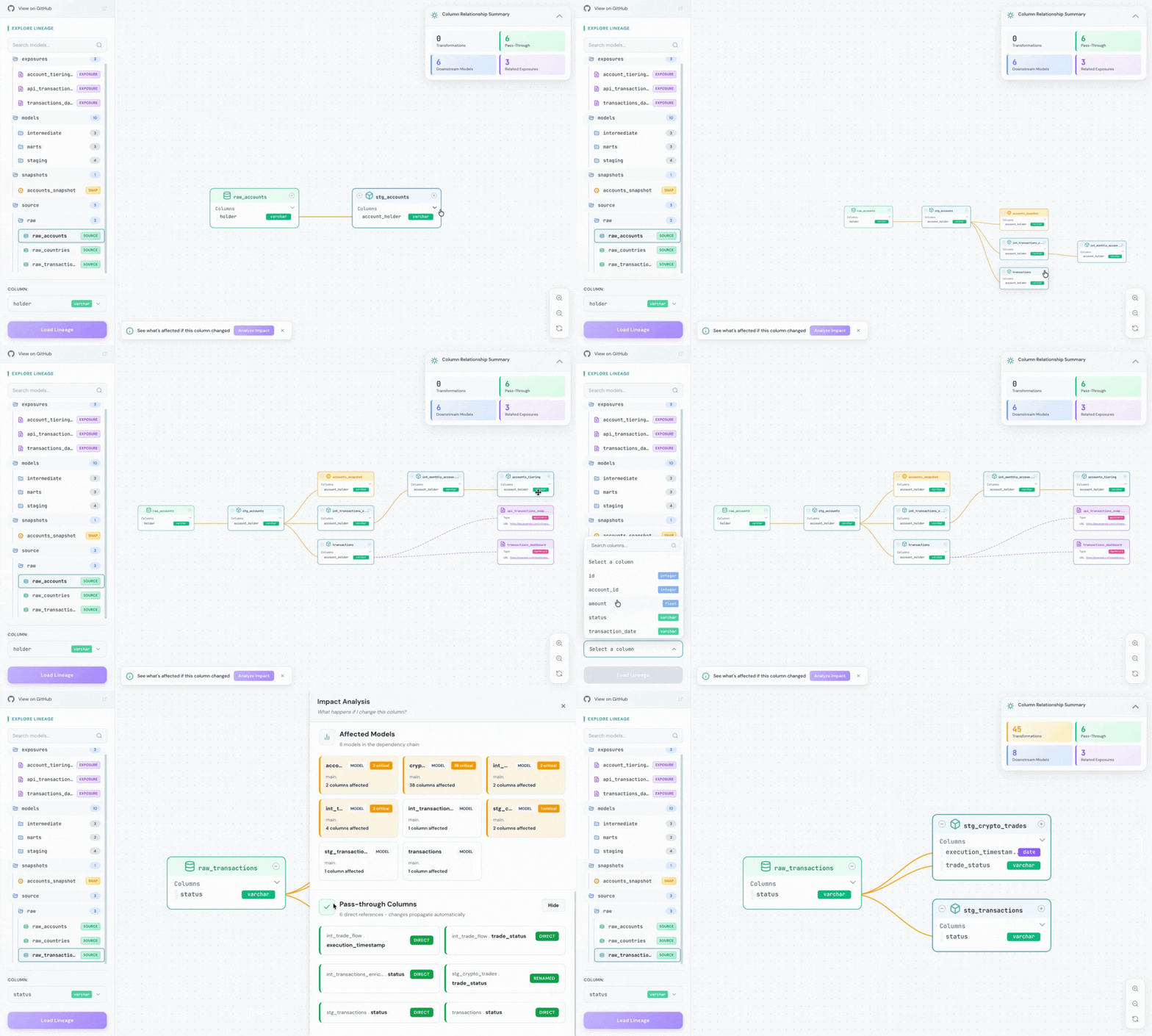
- Impact Analysis: Understand downstream effects of column changes, including affected models, transformations, and exposures
- Interactive Explorer: A local web server with an intuitive UI to explore model and column lineage visually, including associated transformations
Installation
bashpip install dbt-col-lineage
Usage
First, ensure your dbt project is compiled and you have generated the catalog:
bashdbt compile dbt docs generate
Interactive Explorer
Start the interactive web interface to explore lineage and perform impact analysis:
bashdbt-col-lineage --explore \ --manifest path/to/manifest.json \ --catalog path/to/catalog.json \ --port 8080 # Optional port selection
This starts a server (defaulting to port 8000). Open your web browser to the specified address (e.g., http://127.0.0.1:8080).
Workflow:
- Select a model and column from the sidebar to visualize its lineage
- Click "Analyze Impact" to see which models, transformations, and exposures will be affected if you change that column
- Review the impact analysis panel showing:
- Columns that require review (with transformations that may break)
- Pass-through columns (direct references)
- Affected models in the dependency chain
- Affected exposures
Options
--explore: Starts the interactive web server for exploring lineage and impact analysis--catalog: Path to the dbt catalog file (default:target/catalog.json)--manifest: Path to the dbt manifest file (default:target/manifest.json)--port,-p: Port for the interactive web server (default:8000)--adapter: Override the SQL dialect used by the parser (sqlglot dialect name, e.g.,tsql,snowflake,bigquery). When provided, this overrides the adapter detected from the dbt manifest.
Limitations
- Doesn't support python models
- Some functions/syntax cannot be parsed properly, leading to models being skipped
Compatibility
The tool has been tested with the following dbt adapters:
- Snowflake
- SQLite
- DuckDB
- MS SQLServer / TSQL
License
This project is licensed under the MIT License - see the LICENSE file for details.
Contributors
Showing top 1 contributor by commit count.

Related Repositories

Kotlin/binary-compatibility-validator
Public API management tool

siom79/japicmp
Comparison of two versions of a jar archive

BDFD-Learning-Ground/Coursera_Google-Project-Management-Professional-Certificate
Descritpion Template Quizzes & Assignment Solutions for Google Project Management on Coursera. Also included a few resources on side that I found helpful.

kosli-dev/secure-sdlc-process-template
Secure SDLC process template

arch-team/devpace
BizDevOps rhythm manager for Claude Code — trace business goals to code changes with 18 skills