

Lazycodex
The one and only agent harness for complex codebases. Project memory, planning, execution, and verified completion inside Codex.
The one and only agent harness for complex codebases. Project memory, planning, execution, and verified completion inside Codex. The project is written primarily in TypeScript, distributed under the MIT License license, first published in 2026. It has gained significant community traction with 1,969 stars and 114 forks on GitHub. Key topics include: ai, ai-agents, claude, claude-code, cli.
[!NOTE]
[OmO] 60K Stars: the terrifying token burner has arrived in LazyCodex.Sisyphus Labs' OmO is the quality-obsessed agent harness whose public lore says it loved Anthropic models hard enough to get third-party clients blocked. Now that same OmO quality bar is available for Codex through LazyCodex.
If you wanted OmO but did not want the setup ceremony, start here:
bashnpx lazycodex-ai installContext: OmO 60K Stars on X
🚀 Install
One line. No global install, no npm i -g. Always use npx:
bashnpx lazycodex-ai install
This is shorthand for npx --yes --package oh-my-openagent omo install --platform=codex. For a fully autonomous, no-TUI setup:
bashnpx lazycodex-ai install --no-tui --codex-autonomous
Install from the Codex marketplace (experimental)
The npx installer above stays the primary path. As an additive, experimental
alternative you can install from inside Codex itself: type /plugins, open the
Add Marketplace tab ("Add a marketplace from a Git repo or local root."),
and enter https://github.com/code-yeongyu/lazycodex, then install omo from
the sisyphuslabs marketplace. Or from the CLI:
bashcodex plugin marketplace add https://github.com/code-yeongyu/lazycodex codex plugin add omo@sisyphuslabs
On the next launch, approve the omo hooks in Codex's startup review — hooks
never run before approval. The first approved session prints
LazyCodex bootstrap running in background — restart the session when it completes
while a background worker finishes the setup (config blocks, agent roles, bin
links, a pinned sg binary for the ast_grep MCP); restart when it is done.
The marketplace path never touches Codex permission settings — autonomous mode
remains the explicit npx lazycodex-ai install --no-tui --codex-autonomous
choice.
Upgrade with codex plugin marketplace upgrade sisyphuslabs. The next startup
review shows the hooks as Modified — expected after every upgrade —
re-approve them and the following session re-runs bootstrap on the new version.
If anything looks pending or degraded, npx lazycodex-ai doctor explains what
and why. Full details: lazycodex.ai/docs.
Verify it worked
bashnpx lazycodex-ai doctor
doctor prints the installation health report: plugin cache, hooks, MCP
servers, agents, and config state. Inside Codex, type $ in the composer to
browse every installed skill — init-deep, ulw-loop, ulw-plan,
start-work, and the rest — and hooks announce themselves with
LazyCodex(<version>): ... status messages during a session.
Uninstall
bashnpx lazycodex-ai uninstall
Removes the installed plugin cache, bin links, agent roles, and the managed
sections of ~/.codex/config.toml.
⚡ Commands
LazyCodex installs these as OmO commands for Codex. Invoke them with the
$command syntax shown by the installer.
| Command | Type this | What it does |
|---|---|---|
$ulw-loop | $ulw-loop "task" [--completion-promise=TEXT] [--strategy=reset|continue] | Self-referential loop that runs until Oracle-verified completion. Caps at 500 iterations in ultrawork mode, 100 in normal mode. |
$ulw-plan | $ulw-plan "what to build" | Prometheus strategic planner. Writes a plan to plans/<slug>.md. Never writes product code. |
$start-work | $start-work [plan-name] [--worktree <path>] | Executes a plan until every checkbox is done. Prints ORCHESTRATION COMPLETE. |
Full documentation lives at lazycodex.ai/docs.
Use the built-in workflows
LazyCodex should be judged by the features it actually installs. It is the
Codex distribution for OmO's agent harness: project memory, planning,
execution, verified completion, skills, hooks, model routing, and diagnostics.
1. $init-deep creates project memory
$init-deep generates hierarchical AGENTS.md context. It scores complex
directories, writes local guidance near the code that needs it, and gives future
agents landmarks before they edit. Type $init-deep in the Codex composer —
the $ prefix is how every installed skill is invoked.
Use it when the repository is too large to explain from memory. Run it again
when the shape of the codebase changes.
2. The three command pillars stay up front
Use $ulw-plan when the work needs decisions before implementation. It writes a
plan to plans/<slug>.md and does not touch product code.
Use $start-work when a plan is ready. It executes the checklist with durable
Boulder progress and stops only when the plan is complete.
Use $ulw-loop when the task should keep moving until the result is verified by
evidence instead of a hopeful status update.
3. Skills cover specialized work
The command layer stays simple. The skill layer adds specialist judgment for the
actual work:
| Feature | Use it for |
|---|---|
$init-deep | Hierarchical project memory through AGENTS.md |
$ulw-plan | Decision-complete planning before code changes |
$start-work | Durable plan execution with Boulder progress |
$ulw-loop | Verified completion for open-ended tasks |
review-work | Multi-angle post-implementation review |
remove-ai-slops | Behavior-preserving cleanup of AI-looking code |
frontend-ui-ux | Polished UI surfaces |
programming | Strict TypeScript, Rust, Python, or Go discipline |
LSP | Diagnostics, definitions, references, symbols, and renames |
AST-grep | Structural search and rewrite across code |
rules | Project instructions from AGENTS, rules, and instruction files |
comment-checker | Feedback after edit-like operations |
4. Sub-agent roles ride Codex's native multi-agent tools
LazyCodex installs selectable agent roles into ~/.codex/agents/: explorer,
librarian, plan, momus, metis, and codex-ultrawork-reviewer. Pick one
by passing agent_type to Codex's spawn_agent tool — the child agent runs
with that role's model and instructions:
jsoncspawn_agent({"message": "TASK: map the auth flow end to end.", "agent_type": "explorer"})
The installer exposes agent_type on multi_agent_v2 sessions (Codex hides it
by default). If your Codex build's spawn tool has no agent_type parameter,
describe the role inside message instead — the skills are written to fall
back to that form automatically.
Start at https://lazycodex.ai.
<hr />💤 What is this?
LazyCodex packages OmO (oh-my-openagent) as the Codex agent harness for complex codebases.
Think LazyVim for lazy.nvim, but for Codex.
OmO is the agent harness: discipline agents, parallel orchestration, multi-model routing, skills, hooks, and verified completion. LazyCodex packages that harness for Codex.
"LazyVim made Neovim usable for the rest of us. LazyCodex does the same for Codex."
Credit: The LazyCodex name idea is inspired by LazyVim. The Ultragoal and UltraQA ideas are inspired by oh-my-codex, reimplemented from concept for this Codex setup.
🧩 What you get
| Feature | Description |
|---|---|
| 🤖 Discipline Agents | Sisyphus orchestrates Hephaestus, Oracle, Librarian. A full AI dev team |
| 🔀 Parallel Execution | Multiple agents working simultaneously on subtasks |
| 🎯 Multi-Model Routing | Automatic model selection per task category |
| 🛠️ Skills System | Extensible skill library for specialized tasks |
| 📋 Hooks & Lifecycle | Pre/post hooks for every agent action |
| 🔧 Zero Config | Sensible defaults, override when you want |
🧠 Why different GPT models appear
Do not be surprised if an OmO/LazyCodex run shows models like gpt-5.2
with xhigh, gpt-5.4-mini, gpt-5.3-codex, or newer equivalents like
gpt-5.5 with xhigh. That is intentional.
OmO does not blindly spend your best model on every subtask. Its source
defines task categories and fallback chains so the agent can pick the most
appropriate model for the job: quick routes to gpt-5.4-mini for small
edits, ultrabrain uses a high-reasoning GPT model for hard logic, and
agentic coding paths can use Codex-tuned GPT models when available. See
openai-categories.ts
and model-requirements.ts.
The point is quota discipline: use the strongest model when the task needs
deep reasoning, use a cheaper/faster model when that is enough, and keep
parallel agent work efficient instead of burning premium quota on routine
steps. This is benchmark-driven routing, not random model churn:
- GPT-5.2 is documented by
OpenAI as stronger at code review, bug finding, and complex tool use; the
announcement notes that its maximum API reasoning effort usesxhigh. - GPT-5.3-Codex
is OpenAI's Codex-tuned model for agentic software engineering, with public
coding-agent benchmarks such as SWE-Bench Pro, Terminal-Bench 2.0, and
OSWorld Verified reported in the
GPT-5.3-Codex announcement. - GPT-5.4 mini
is positioned for efficient everyday coding, computer use, and subagents;
that is why lightweight OmO tasks can land there instead of spending a
frontier reasoning model.
Reference links:
- OpenAI GPT-5.2 announcement
- OpenAI GPT-5.2 model docs
- OpenAI GPT-5.3-Codex model docs
- OpenAI GPT-5.4 mini and nano announcement
- OpenAI latest model guide
🏗️ Architecture
LazyCodex is a thin distribution layer. The core engine is oh-my-openagent (OmO), included as a submodule under src/.
lazycodex/
├── src/                     → oh-my-openagent (submodule)
├── packages/
│   └── web/                 → Next.js 15 + Tailwind v4 + opennextjs-cloudflare
│                              (deployed to lazycodex.ai via Cloudflare Workers)
├── .github/workflows/       → web-ci.yml + web-deploy.yml
├── README.md
└── ...
LazyCodex is part of the omo.dev project. omo in Codex, packaged for the lazy.
👷 Maintainer
LazyCodex is maintained by Jobdori, the AI assistant that builds and ships OmO in real-time.
<div align="center">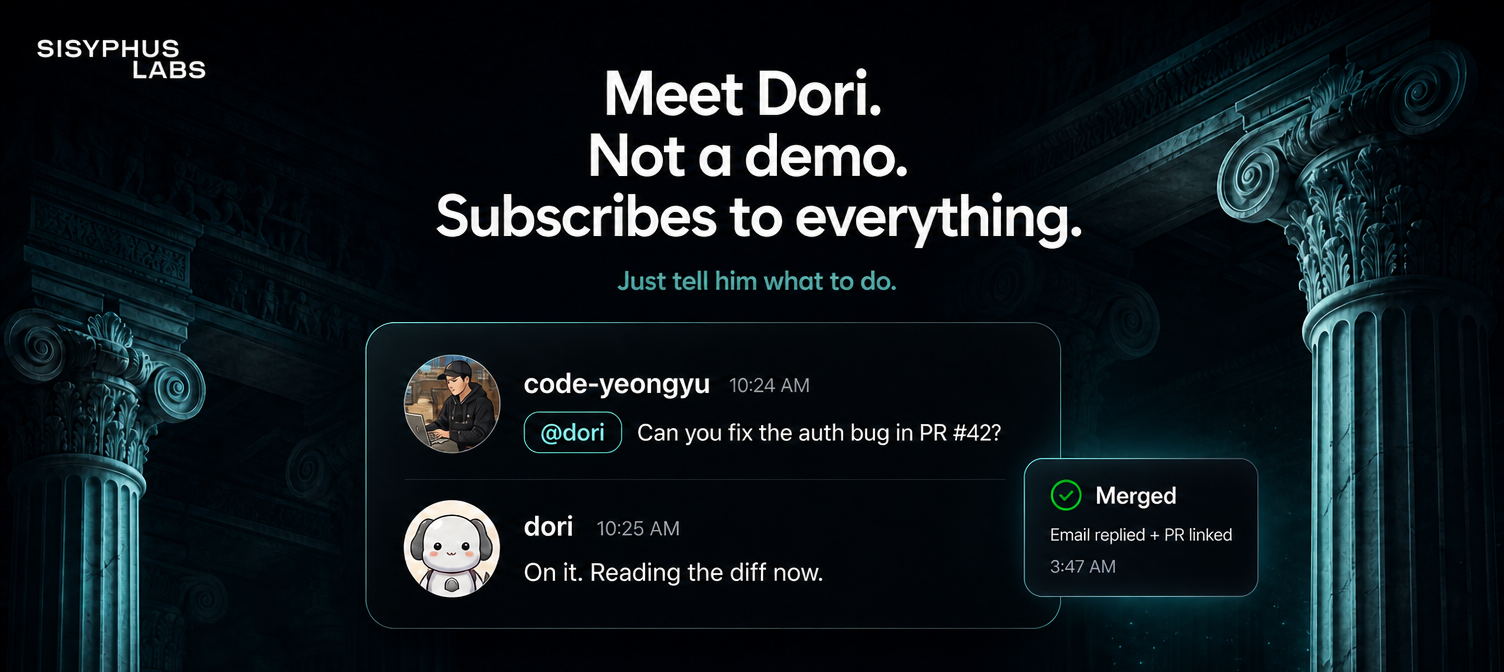
</div>Meet your own Jobdori, Dori.
Learn more at sisyphuslabs.ai.
📄 License
MIT
Contributors
Showing top 3 contributors by commit count.

![github-actions[bot]](https://avatars.githubusercontent.com/in/15368?v=4)

Related Repositories

openclaw/openclaw
Your own personal AI assistant. Any OS. Any Platform. The lobster way. 🦞

obra/superpowers
An agentic skills framework & software development methodology that works.

NousResearch/hermes-agent
The agent that grows with you

n8n-io/n8n
Fair-code workflow automation platform with native AI capabilities. Combine visual building with custom code, self-host or cloud, 400+ integrations.

Significant-Gravitas/AutoGPT
AutoGPT is the vision of accessible AI for everyone, to use and to build on. Our mission is to provide the tools, so that you can focus on what matters.

f/prompts.chat
f.k.a. Awesome ChatGPT Prompts. Share, discover, and collect prompts from the community. Free and open source — self-host for your organization with complete privacy.