

Fastapi radar
A powerful debugging dashboard for FastAPI applications. Monitor HTTP requests, SQL queries, and exceptions in real-time with a beautiful React UI. One-line integration, zero configuration needed.
**A debugging dashboard for FastAPI applications providing real-time request, database query, and exception monitoring.** The project is written primarily in Python, distributed under the MIT License license, first published in 2025. Key topics include: api-monitoring, debugging, developer-tools, devtools, fastapi.
FastAPI Radar


A debugging dashboard for FastAPI applications providing real-time request, database query, and exception monitoring.
Just one line to add powerful monitoring to your FastAPI app!
Featured In
- Python Weekly — Issue 715, Sep 2025
- PythonHub — Featured project
- PythonHub Weekly Digest — Oct 2025
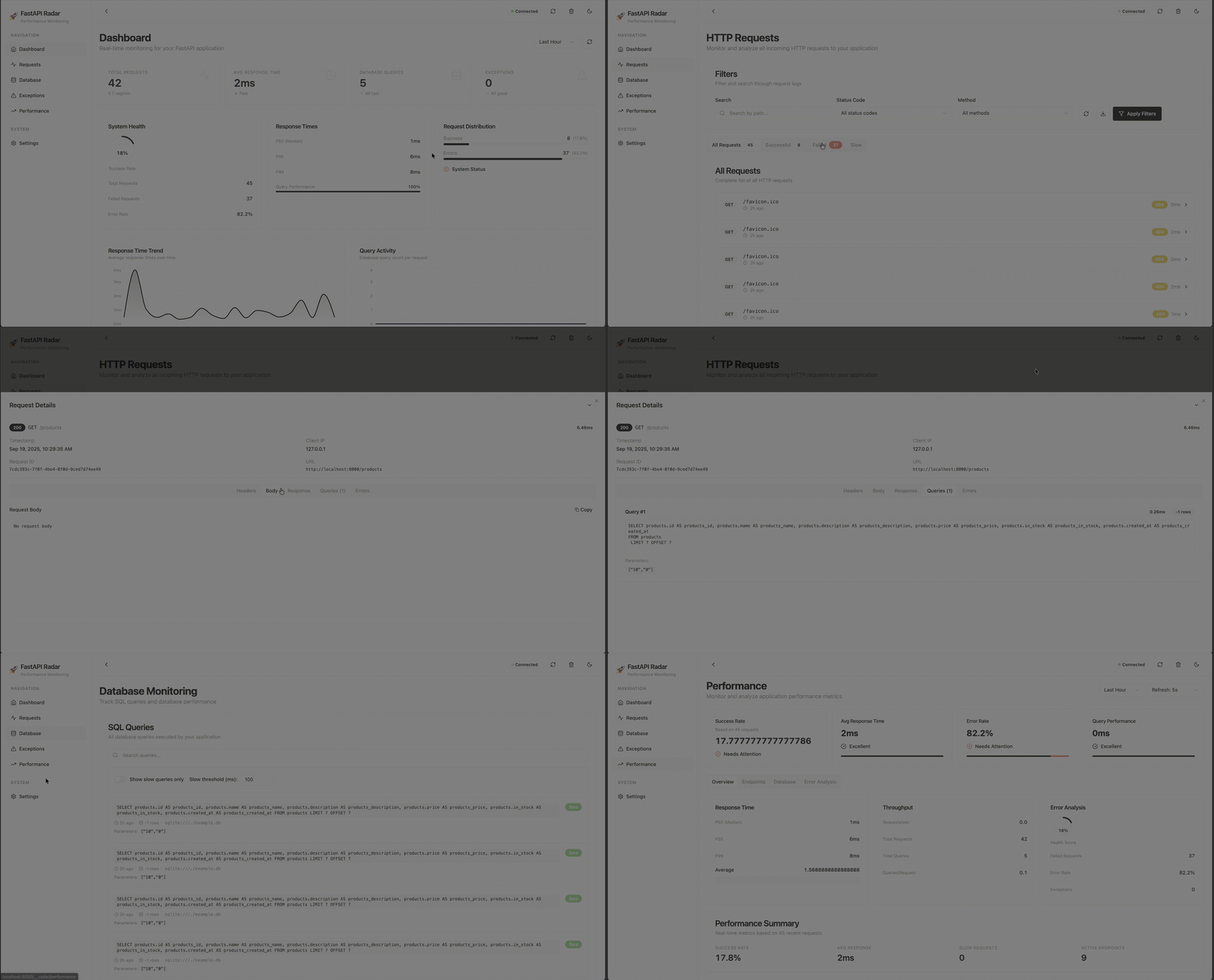
See it in Action
Installation
bashpip install fastapi-radar
Or with your favorite package manager:
bash# Using poetry poetry add fastapi-radar # Using pipenv pipenv install fastapi-radar
Note: The dashboard comes pre-built! No need to build anything - just install and use.
Quick Start
With SQL Database (Full Monitoring)
pythonfrom fastapi import FastAPI from fastapi_radar import Radar from sqlalchemy import create_engine app = FastAPI() engine = create_engine("sqlite:///./app.db") # Full monitoring with SQL query tracking radar = Radar(app, db_engine=engine) radar.create_tables() # Your routes work unchanged @app.get("/users") async def get_users(): return {"users": []}
Without SQL Database (HTTP & Exception Monitoring)
pythonfrom fastapi import FastAPI from fastapi_radar import Radar app = FastAPI() # Monitor HTTP requests and exceptions only # Perfect for NoSQL databases, external APIs, or database-less apps radar = Radar(app) # No db_engine parameter needed! radar.create_tables() @app.get("/api/data") async def get_data(): # Your MongoDB, Redis, or external API calls here return {"data": []}
Access your dashboard at: http://localhost:8000/\_\_radar/
Features
- Zero Configuration - Works with any FastAPI app (SQL database optional)
- Request Monitoring - Complete HTTP request/response capture with timing
- Database Monitoring - SQL query logging with execution times (when using SQLAlchemy)
- Exception Tracking - Automatic exception capture with stack traces
- Real-time Updates - Live dashboard updates as requests happen
- Flexible Integration - Use with SQL, NoSQL, or no database at all
Configuration
pythonradar = Radar( app, db_engine=engine, # Optional: SQLAlchemy engine for SQL query monitoring dashboard_path="/__radar", # Custom dashboard path (default: "/__radar") max_requests=1000, # Max requests to store (default: 1000) retention_hours=24, # Data retention period (default: 24) slow_query_threshold=100, # Mark queries slower than this as slow (ms) capture_sql_bindings=True, # Capture SQL query parameters exclude_paths=["/health"], # Paths to exclude from monitoring theme="auto", # Dashboard theme: "light", "dark", or "auto" db_path="/path/to/db", # Custom path for radar.duckdb file (default: current directory) auth_dependency=None, # Optional: Authentication dependency for dashboard and API access )
Securing the Dashboard
By default, FastAPI Radar is accessible without authentication. For production environments, you should add authentication to protect your monitoring dashboard:
HTTP Basic Authentication
pythonfrom fastapi import FastAPI, Depends, HTTPException, status from fastapi.security import HTTPBasic, HTTPBasicCredentials from fastapi_radar import Radar import secrets app = FastAPI() security = HTTPBasic() def verify_credentials(credentials: HTTPBasicCredentials = Depends(security)): correct_username = secrets.compare_digest(credentials.username, "admin") correct_password = secrets.compare_digest(credentials.password, "secret") if not (correct_username and correct_password): raise HTTPException( status_code=status.HTTP_401_UNAUTHORIZED, detail="Invalid credentials", headers={"WWW-Authenticate": "Basic"}, ) return credentials radar = Radar(app, auth_dependency=verify_credentials) radar.create_tables()
Bearer Token Authentication
pythonfrom fastapi import FastAPI, Depends, HTTPException, status from fastapi.security import HTTPBearer, HTTPAuthorizationCredentials from fastapi_radar import Radar app = FastAPI() security = HTTPBearer() def verify_token(credentials: HTTPAuthorizationCredentials = Depends(security)): if credentials.credentials != "your-secret-token": raise HTTPException( status_code=status.HTTP_401_UNAUTHORIZED, detail="Invalid token", ) return credentials radar = Radar(app, auth_dependency=verify_token) radar.create_tables()
Custom Authentication
You can use any FastAPI dependency for authentication:
pythonfrom fastapi import FastAPI, Depends, HTTPException, Request from fastapi_radar import Radar app = FastAPI() async def custom_auth(request: Request): # Your custom authentication logic api_key = request.headers.get("X-API-Key") if api_key != "your-api-key": raise HTTPException(status_code=401, detail="Unauthorized") return True radar = Radar(app, auth_dependency=custom_auth) radar.create_tables()
The auth_dependency parameter accepts any FastAPI dependency function, giving you full flexibility to implement OAuth2, JWT, API keys, or any other authentication mechanism.
Custom Database Location
By default, FastAPI Radar stores its monitoring data in a radar.duckdb file in your current working directory. You can customize this location using the db_path parameter:
python# Store in a specific directory radar = Radar(app, db_path="/var/data/monitoring") # Creates: /var/data/monitoring/radar.duckdb # Store with a specific filename radar = Radar(app, db_path="/var/data/my_app_monitoring.duckdb") # Creates: /var/data/my_app_monitoring.duckdb # Use a relative path radar = Radar(app, db_path="./data") # Creates: ./data/radar.duckdb
If the specified path cannot be created, FastAPI Radar will fallback to using the current directory with a warning.
Development Mode with Auto-Reload
When running your FastAPI application with fastapi dev (which uses auto-reload), FastAPI Radar automatically switches to an in-memory database to avoid file locking issues. This means:
- No file locking errors - The dashboard will work seamlessly in development
- Data doesn't persist between reloads - Each reload starts with a fresh database
- Production behavior unchanged - When using
fastapi runor deploying, the normal file-based database is used
python# With fastapi dev (auto-reload enabled): # Automatically uses in-memory database - no configuration needed! radar = Radar(app) radar.create_tables() # Safe to call - handles multiple processes gracefully
This behavior only applies when using the development server with auto-reload (fastapi dev). In production or when using fastapi run, the standard file-based DuckDB storage is used.
What Gets Captured?
- ✅ HTTP requests and responses
- ✅ Response times and performance metrics
- ✅ SQL queries with execution times
- ✅ Query parameters and bindings
- ✅ Slow query detection
- ✅ Exceptions with stack traces
- ✅ Request/response bodies and headers
Contributing
We welcome contributions! Please see our Contributing Guide for details.
Development Setup
For contributors who want to modify the codebase:
- Clone the repository:
bashgit clone https://github.com/doganarif/fastapi-radar.git cd fastapi-radar
- Install development dependencies:
bashpip install -e ".[dev]"
- (Optional) If modifying the dashboard UI:
bashcd fastapi_radar/dashboard npm install npm run dev # For development with hot reload # or npm run build # To rebuild the production bundle
- Run the example apps:
bash# Example with SQL database python example_app.py # Example without SQL database (NoSQL/in-memory) python example_nosql_app.py
License
This project is licensed under the MIT License - see the LICENSE file for details.
Acknowledgments
<!-- arif-signature:start -->Built by Arif Dogan - production AI and backend engineer.
I help SaaS teams ship production AI features, fast backends, and reliable developer tools.
<!-- arif-signature:end -->Contributors
Showing top 6 contributors by commit count.


Related Repositories

Nya-Foundation/NyaProxy
NyaProxy acts like a smart, central manager for accessing various online services (APIs) – think AI tools (like OpenAI, Gemini, Anthropic), image generators, or almost any web service that uses access keys. It helps you use these services more reliably, efficiently, and securely.

onllm-dev/onWatch
Track AI API quotas across Synthetic, Z.ai, Anthropic (Claude Code), Codex, GitHub Copilot & Antigravity in real time. Lightweight background daemon (<50MB RAM), SQLite storage, Material Design 3 dashboard. Zero telemetry.

tom-draper/api-analytics
Effortless monitoring and analytics for API frameworks.

TPIsoftwareOSPO/digiRunner-Open-Source
digiRunner: Your API Gateway for Microservices

API-200/api200
API 200 is an open source API gateway to simplify 3rd-party integrations. Import endpoints, set up caching, retries, and mocks. Access all services via one URL. Monitor logs, track errors, and get alerts on API incidents.

apitally/apitally-py
Simple API monitoring & analytics for Python apps