

NVFi
NVFi in PyTorch (NeurIPS 2023)
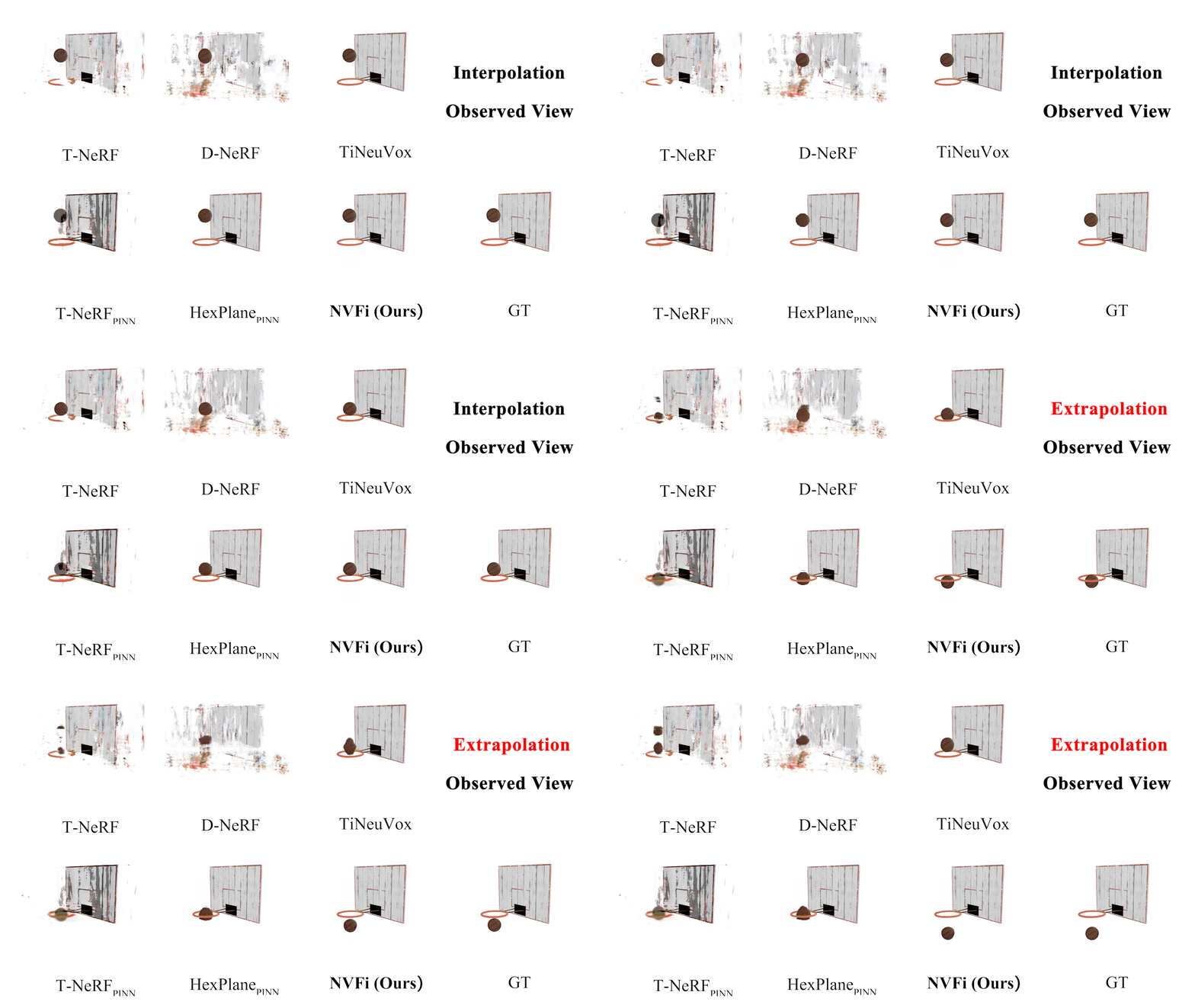
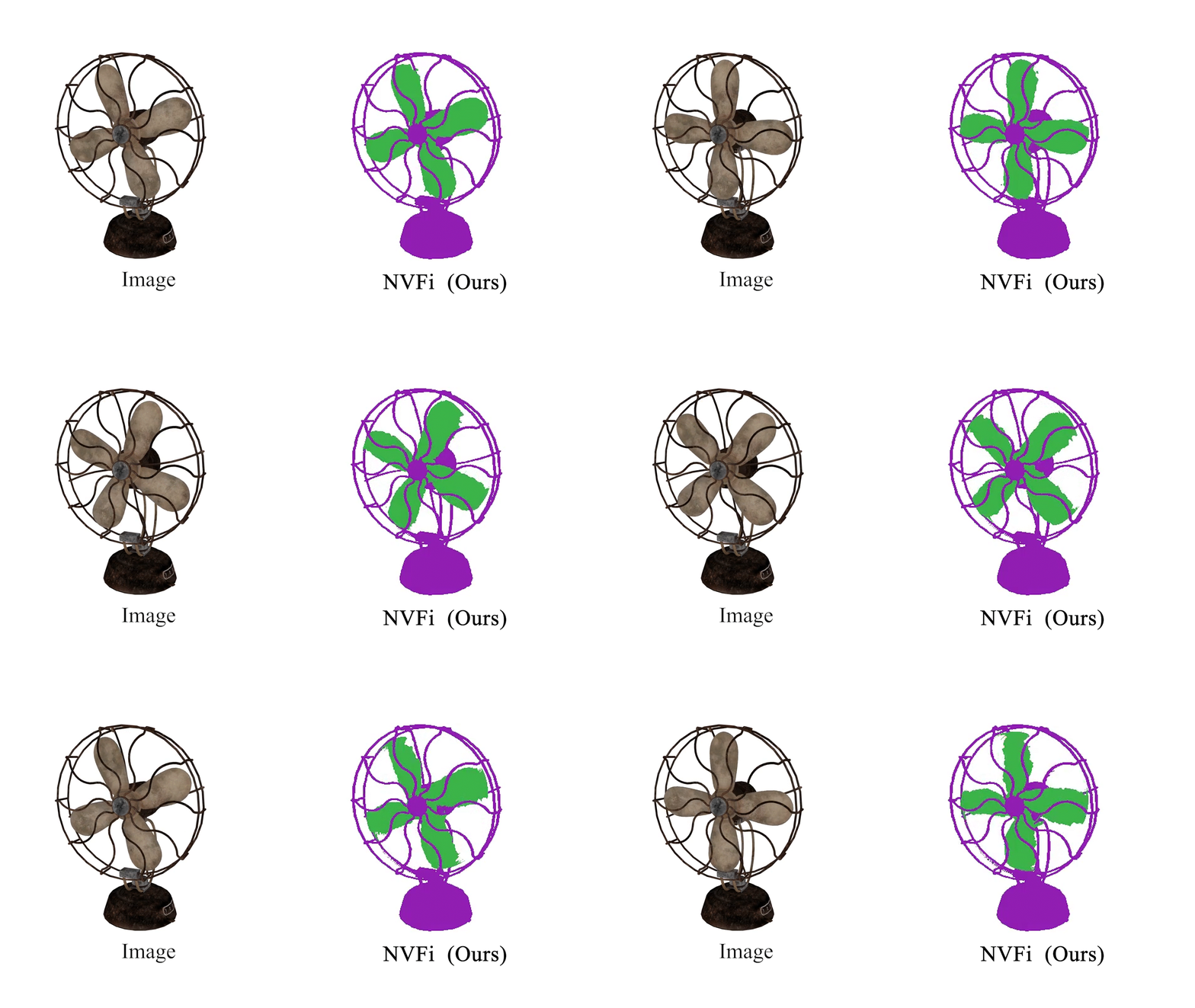
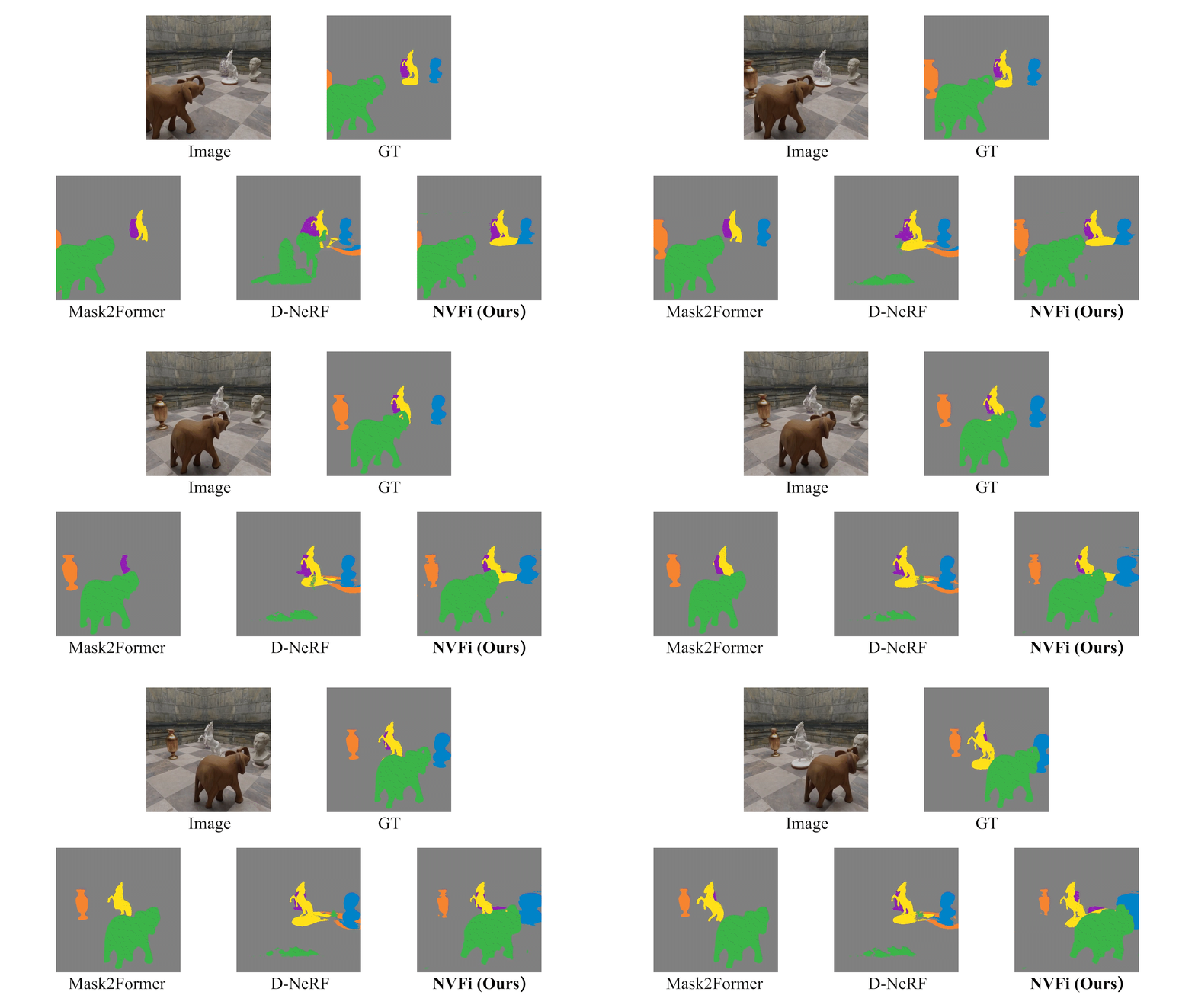
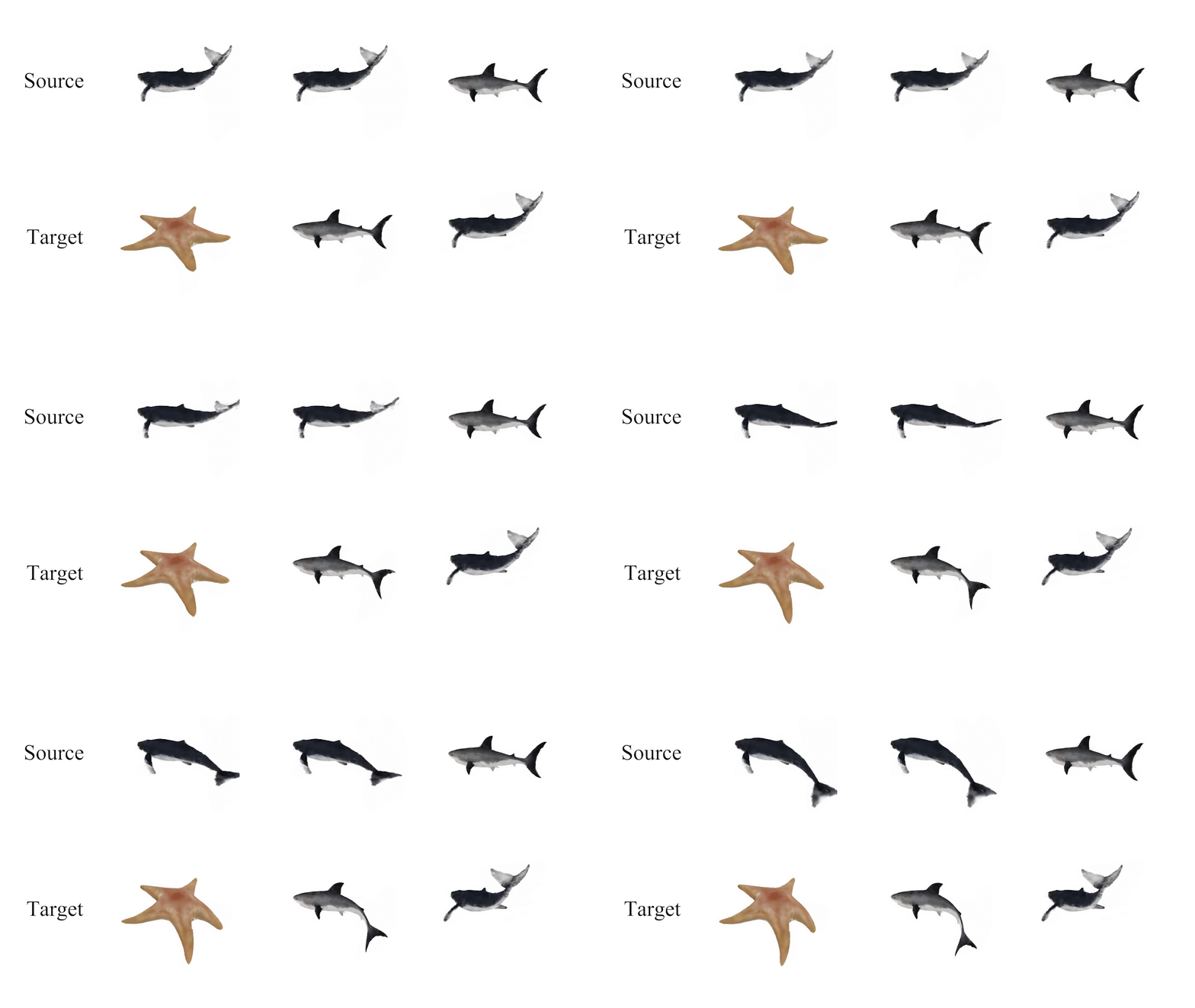
We present a novel framework to simultaneously learn the geometry, appearance, and physical velocity of 3D scenes only from video frames, such that multiple desirable applications can be supported, including future frame extrapolation, unsupervised 3D semantic scene decompositio, and dynamic motion transfer. The project is written primarily in Python, distributed under the Other license, first published in 2023. Key topics include: 3d, 3d-physics-learning, 3d-reconstruction, 3d-rendering, 3d-velocity.
NVFi: Neural Velocity Fields for 3D Physics Learning from Dynamic Videos (NeurIPS 2023)



We present a novel framework to simultaneously learn the geometry, appearance, and physical velocity of 3D scenes only from video frames, such that multiple desirable applications can be supported, including future frame extrapolation, unsupervised 3D semantic scene decompositio, and dynamic motion transfer.
Environment Setup
    # create conda environment
    conda create --name nvfi python=3.9

    # activate env
    conda activate nvfi
    conda install pytorch==1.12.1 torchvision==0.13.1 torchaudio==0.12.1  cudatoolkit=11.6 -c pytorch -c conda-forge
    pip install functorch==0.2.1

    # If you want to run for segmentation application, run the following
    conda install pytorch3d -c pytorch3d

    # pip install
    pip install -r requirements.txt
Datasets
Both Dynamic Object and Dynamic Indoor Scene datasets could be downloaded from google drive or from HuggingFace: Dynamic Objects, Dynamic Indoor Scenes, and NVIDIA Dynamic Scenes. We split the data in HuggingFace version for easier evaluation, please follow the datacard there.
Please change the "logdir" and "basedir" in config based on the locations of downloaded datasets.
Training
We provide several config files under config folder for different datasets.
For reconstruction, you can run
python train_nvfi.py --config ./config/InDoorObj/bat.yaml --static_dynamic
If you want to train the segmentation fields, simply run the following commend
python train_segm.py --config config/InDoorObj/bat.yaml --checkpoint -1
Evaluation
For future frame extrapolation, you can render the results by running
python train_nvfi.py --config ./config/InDoorObj/bat.yaml --checkpoint -1 --not_train --eval_test
For segmentation prediction, you can run
python test_segm_render.py --config config/InDoorObj/bat.yaml --checkpoint -1 --ckpt_segm 1000
Citation
If you find this code useful, please consider cite:
bibtex@article{li2023nvfi, title={NVFi: Neural Velocity Fields for 3D Physics Learning from Dynamic Videos}, author={Jinxi Li and Ziyang Song and Bo Yang}, year={2023}, journal={NeurIPS} }
Contributors
Showing top 3 contributors by commit count.


Related Repositories

mrdoob/three.js
JavaScript 3D Library.

DavidHDev/react-bits
An open source collection of animated, interactive & fully customizable React components for building memorable websites.

FreeCAD/FreeCAD
Official source code of FreeCAD, a free and opensource multiplatform 3D parametric modeler.

pmndrs/react-three-fiber
🇨🇭 A React renderer for Three.js

BabylonJS/Babylon.js
Babylon.js is a powerful, beautiful, simple, and open game and rendering engine packed into a friendly JavaScript framework.

libgdx/libgdx
Desktop/Android/HTML5/iOS Java game development framework